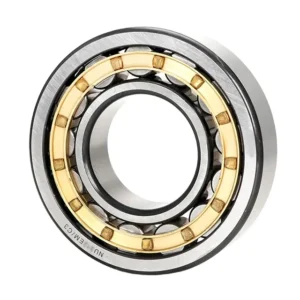
Cylindrical Roller Bearings
Overview
Cylindrical roller bearings use cylindrical rolling elements in line contact with the inner and outer raceways, giving them significantly higher radial load capacity than ball bearings of the same size. This makes them the standard choice for gearboxes, electric motors, machine tool spindles, rolling mills, and other equipment carrying heavy radial loads at medium-to-high speeds.
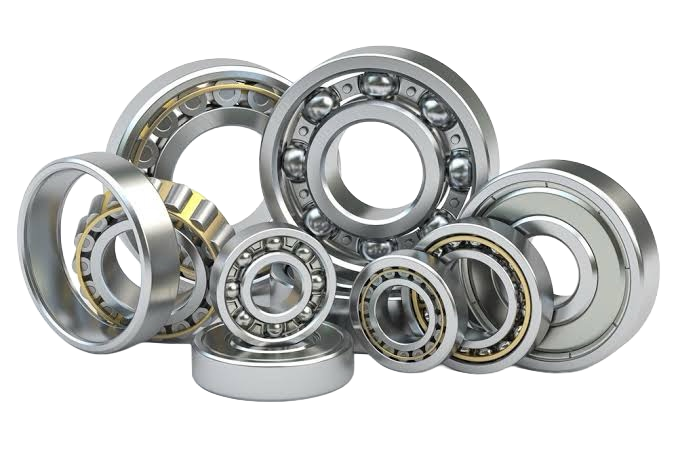
Talos bearing stock single-row (NU, NJ, N, NF, NUP), double-row (NN, NNU), and full-complement series in bore sizes from 10 mm to 500+ mm, in standard and high-precision (P5/P4) grades. OEM/custom specifications and private labeling are available for bulk orders.
Products
Interchangeable With : SKF、NSK
-
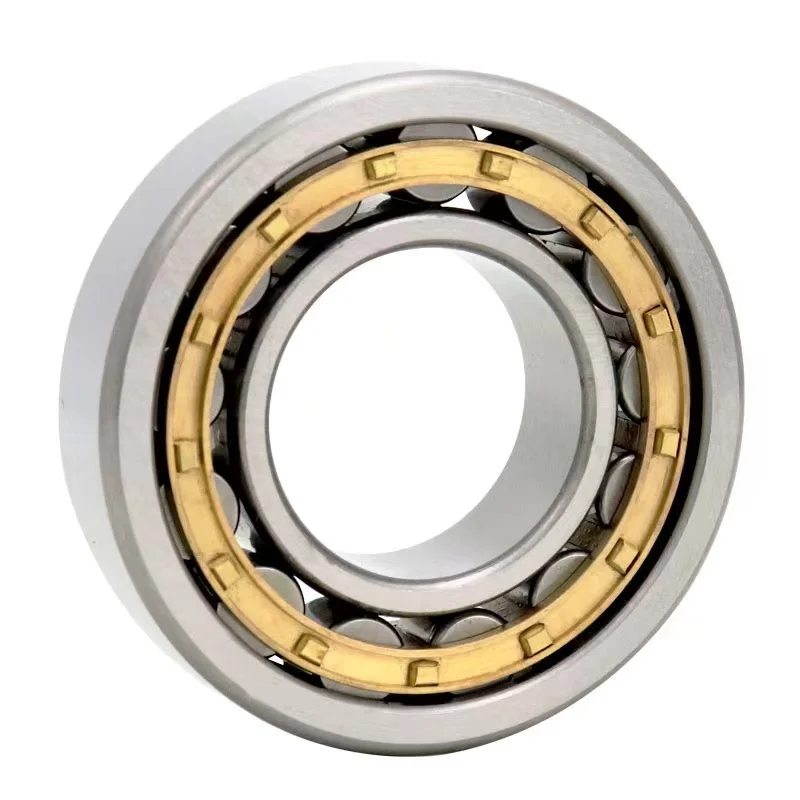
NU 210 EM single row cylindrical roller bearing, 50×90×20mm with machined brass cage and GCr15 steel for high-speed radial loads...
Product Series Table
| Series | Configuration | Axial Capability | Typical Bore Range | Speed Capability | Typical Position |
|---|---|---|---|---|---|
| NU 2/3/4-series | Single row, ribs on outer ring | None (floating) | 20–500 mm | High | Non-locating / floating |
| N 2/3/4-series | Single row, ribs on inner ring | None (floating) | 20–500 mm | High | Non-locating / floating |
| NJ 2/3-series | Single row, one fixed rib | One direction, light | 20–400 mm | High | Light axial location |
| NUP 2/3-series | Single row + loose washer | Both directions, light-moderate | 20–400 mm | High | Locating bearing |
| NF 2/3-series | Single row, reversed rib | One direction, light | 20–400 mm | High | Light axial location |
| NN 30-series (tapered bore) |
Double row | None (radial only) | 40–500 mm | High, high stiffness | Machine tool spindle |
| NNU 49-series (tapered bore) |
Double row | None (radial only) | 40–500 mm | High, high stiffness | Machine tool spindle |
| Full complement (cageless) |
Single or double row | None | Varies by series | Low–moderate | Heavy load, low speed |
Applications & Industries
- Industrial gearboxes ——Helical & planetary gear stages .
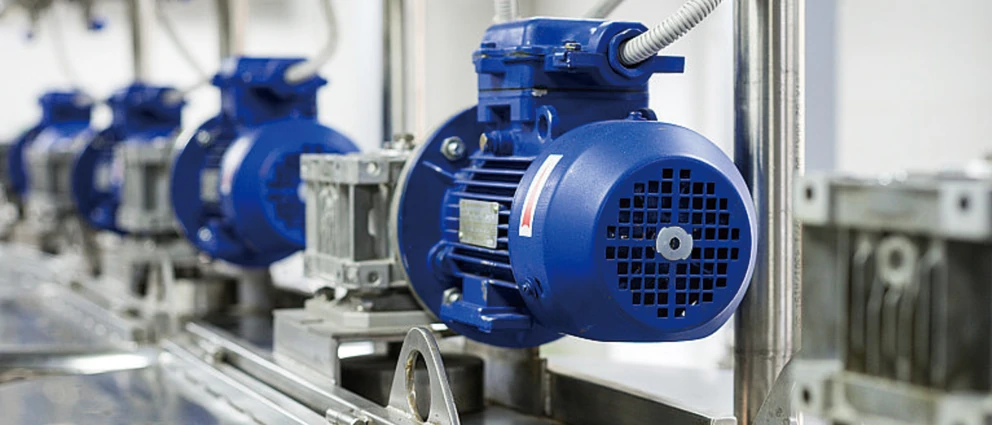
- Electric motors & generators —— Medium-to-large frame motors, traction motors .
- Machine tool spindles —— CNC lathe & milling spindles .
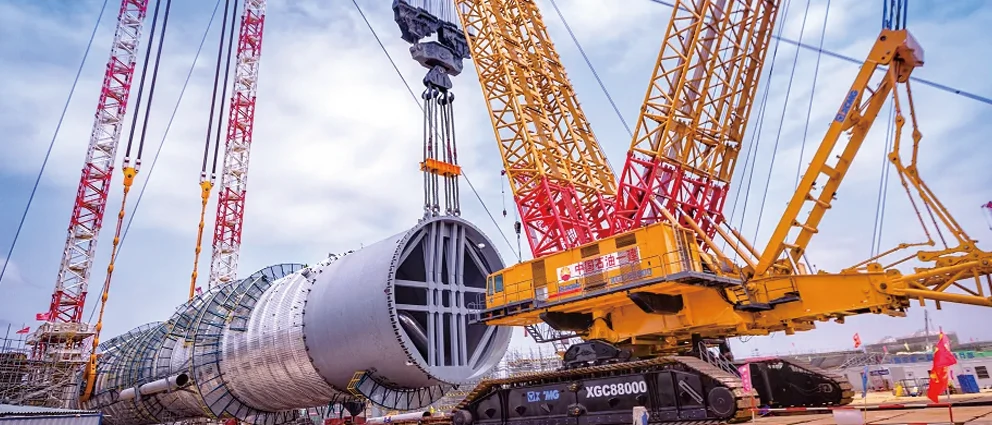
- Rolling mills —— Roll necks, back-up rolls .
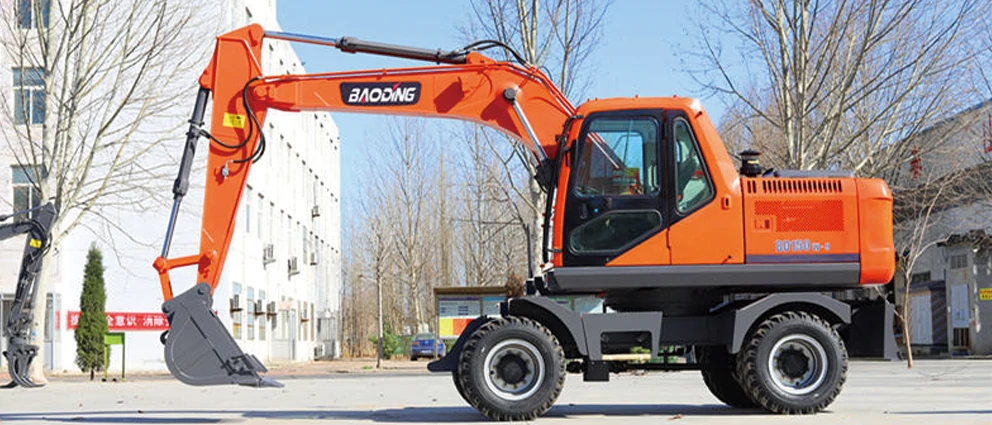
- Wind turbine gearboxes —— Planetary & parallel-shaft gear stages .
- Papermaking & printing machinery —— Roller and cylinder support .


FAQs
What is the difference between NU and NUP cylindrical roller bearings?
NU-type bearings have ribs on the outer ring only and allow free axial displacement between inner and outer rings — they carry no axial load and are used as the floating bearing in a shaft system. NUP-type bearings add a loose locating washer that restrains axial movement in both directions, allowing them to function as a locating bearing with light-to-moderate axial load capacity.
Can cylindrical roller bearings carry axial load?
It depends on the series. NU and N types carry no axial load by design. NJ and NF types carry light axial load in one direction. NUP types carry light-to-moderate axial load in both directions. None of these designs is intended to replace a thrust bearing or angular contact bearing under significant continuous axial load.
How is a cylindrical roller bearing different from a tapered roller bearing?
Cylindrical roller bearings use straight (cylindrical) rollers running parallel to the bearing axis and are optimized for radial load with limited or no axial capability. Tapered roller bearings use conical rollers with raceways angled to a common apex, allowing them to carry substantial combined radial and axial loads — the right choice depends on the actual load direction in your application, not just bore size.
What internal clearance class should I specify?
Clearance class should be selected based on shaft/housing fit, expected temperature rise, and speed, per ISO 5753 — not assumed from a single fixed value. Higher-speed or higher-temperature applications typically need a larger clearance class (C3/C4) to compensate for thermal expansion; share your operating conditions and our team will confirm the correct class.
contact us
Need Help Selecting the Right Bearing?
Our engineering team can help you choose the most suitable Bearing based on your application requirements, operating conditions, and performance targets.
- ✓ Fast Quotation
- ✓ Technical Support
- ✓ Global Shipping
Let’s click here to send your inquiry now!